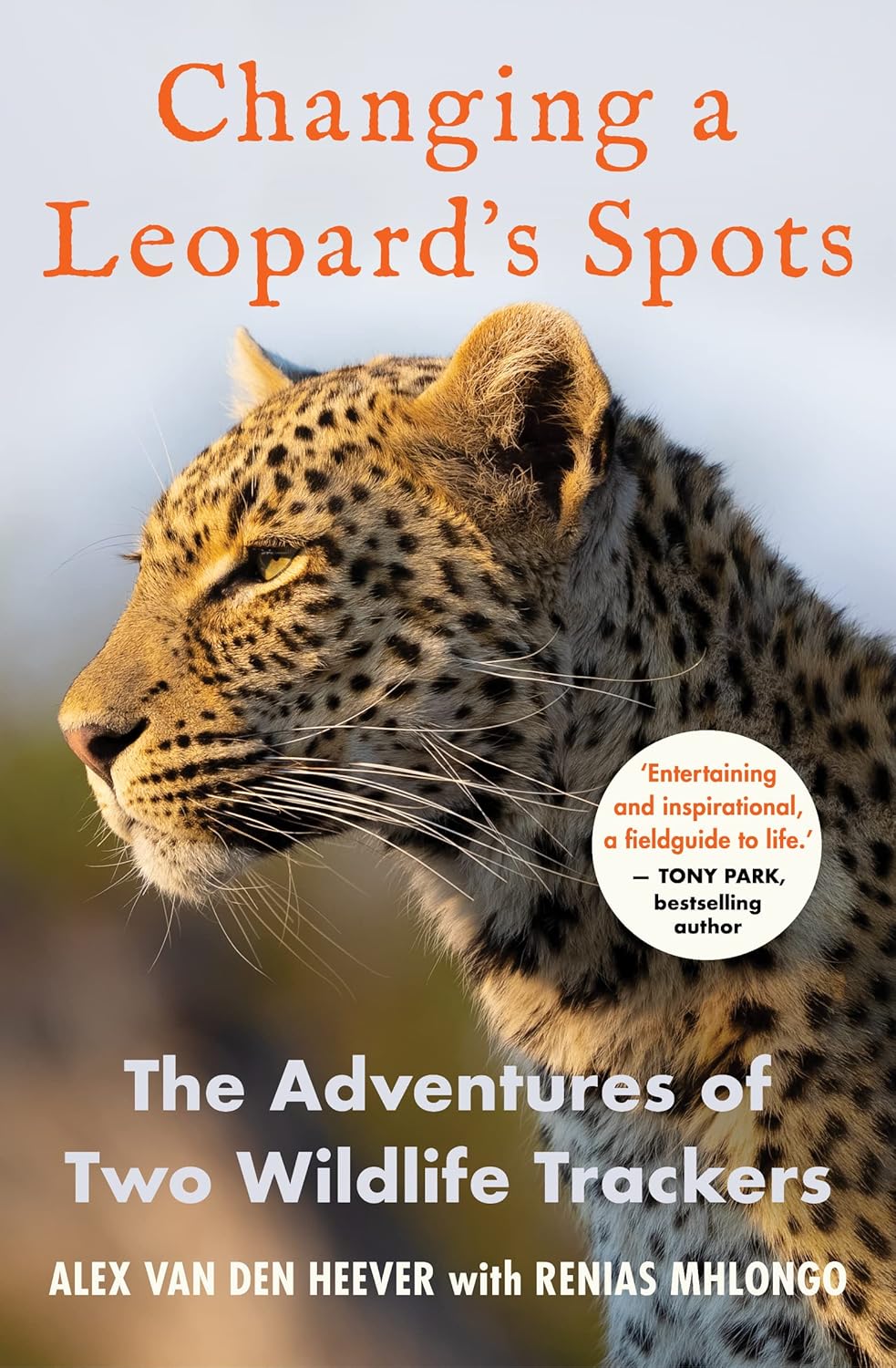
isbn-13: 9781770106987
Paperback
AI Generated Content
Generated by gemini-3-pro-preview
Introduction
“Changing a Leopard’s Spots: The Adventures of Two Wildlife Trackers” is a non-fiction memoir co-authored by Alex Van Den Heever and Renias Mhlongo. The book chronicles the remarkable three-decade partnership between two men from vastly different backgrounds—Van Den Heever, a white South African game ranger, and Mhlongo, a legendary Shangaan tracker [1]. Set against the stunning backdrop of the Londolozi Game Reserve in the Sabi Sands, South Africa, the narrative transcends a simple collection of bush stories to become a profound exploration of cross-cultural friendship, trust, and the healing of historical wounds in post-Apartheid South Africa [3].
Overview of the Key Points
The narrative is structured chronologically, tracing the evolution of Alex and Renias’s relationship from a strictly professional hierarchy to a deep, brotherly bond.
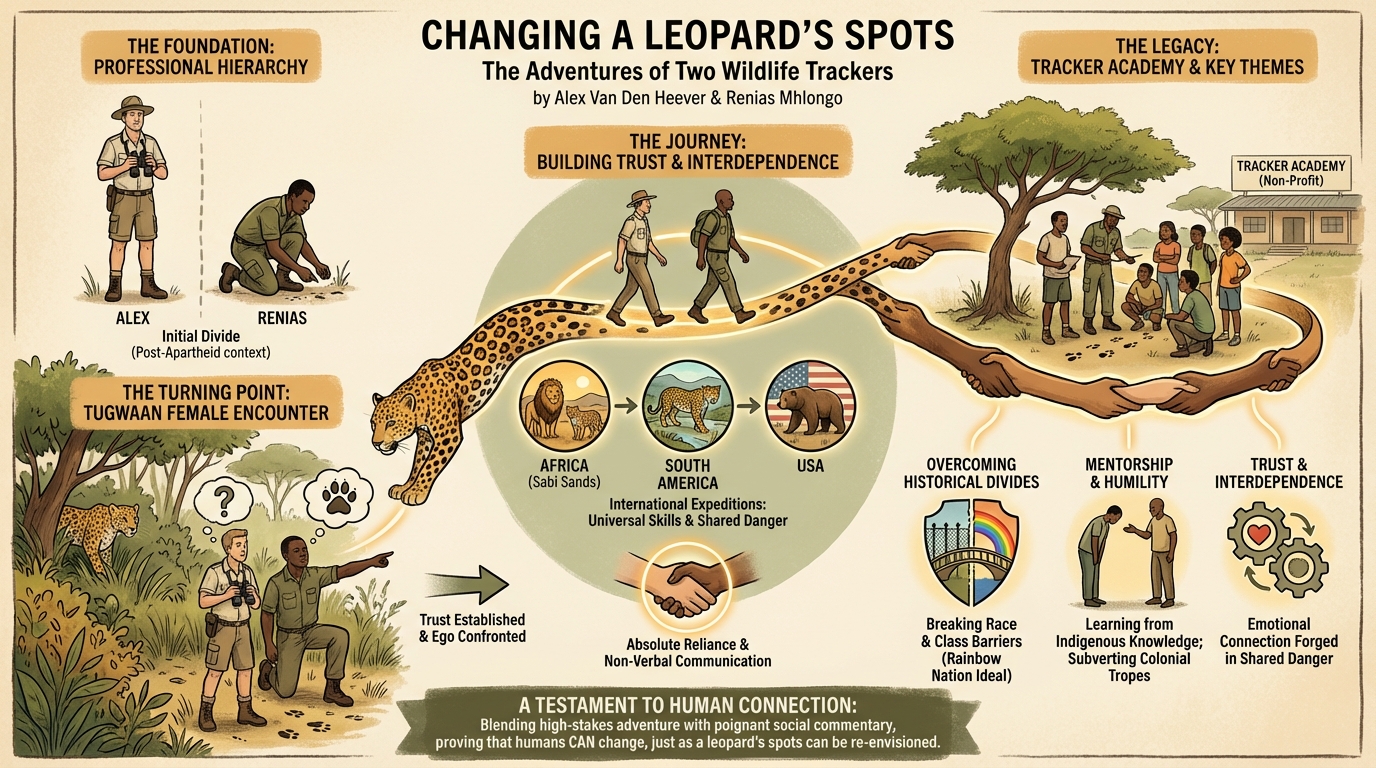
A defining moment in their early partnership involves the tracking of the “Tugwaan female,” a notoriously elusive and aggressive leopard. Alex, then a young and inexperienced guide feeling the pressure to perform for guests, initially doubts Renias’s tracking decisions. When Renias successfully locates the predator based on signs invisible to Alex—and subsequently protects Alex during a tense confrontation—the dynamic shifts. This encounter forces Alex to confront his own ego and recognize Renias not as a subordinate, but as a master of the environment [3].
The book expands beyond the African savanna, detailing the duo’s international expeditions. They travel to South America to track jaguars and to the United States to track grizzly bears, demonstrating the universality of their tracking skills [2]. These adventures highlight their professional synergy and the seamless non-verbal communication they developed over years of facing danger together.
A significant portion of the book focuses on “The Realisation of a Dream”: the founding of the Tracker Academy. Recognizing that indigenous tracking skills were in danger of being lost, Alex and Renias established this non-profit organization to preserve these ancient traditions and provide employment opportunities for unemployed youth, thereby cementing their legacy beyond their own adventures [3].
Overview of the Key Themes
Trust and Interdependence At the heart of the memoir is the theme of absolute reliance. In the African bush, facing lions and leopards on foot, the guide and tracker hold each other’s lives in their hands. This physical interdependence becomes a powerful metaphor for their emotional connection, illustrating how shared danger can forge unbreakable bonds [2].
Overcoming Historical Divides The title plays on the idiom that “a leopard cannot change its spots,” arguing instead that humans can change. The book serves as a microcosm of the “Rainbow Nation” ideal, showing how two men—one privileged by the Apartheid system and the other dispossessed by it—dismantled the barriers of race and class to treat each other as equals [2].
Mentorship and Humility The story subverts the colonial trope of the white authority figure. Alex candidly writes about his early insecurities and the necessary journey of humbling himself to learn from Renias. The book elevates indigenous knowledge systems, presenting Renias not just as a skilled worker but as a mentor and philosopher of the natural world [3].
Conclusion
“Changing a Leopard’s Spots” is a moving testament to the power of human connection and the art of tracking. It successfully blends high-stakes wildlife adventure with a poignant social commentary, offering readers a glimpse into a partnership that defied the odds. It is a story about learning to see—both the subtle signs of the wild and the humanity in others.
Further Reading
- “Cathedral of the Wild” by Boyd Varty – A memoir set in the same landscape of Londolozi, exploring themes of nature and healing.
- “The Elephant Whisperer” by Lawrence Anthony – A gripping account of conservation and the deep emotional bonds between humans and elephants.
- “The Art of Tracking: The Origin of Science” by Louis Liebenberg – An in-depth look at the cognitive and scientific aspects of tracking.
- “Cry of the Kalahari” by Mark and Delia Owens – A classic memoir of survival and research in the African wilderness.
- “Tracker Manual” by Alex Van Den Heever, Renias Mhlongo, and Karel Benadie – A practical guide for those inspired to learn the skills described in the memoir.
Sources
- [1] Goodreads: https://www.goodreads.com/en/book/show/53763280-changing-a-leopard-s-spots
- [2] Everand/Scribd: https://www.everand.com/book/627913181/Changing-a-Leopard-s-Spots-The-Adventures-of-Two-Wildlife-Trackers
- [3] The Books Page Review: https://thebookspage.co.za/2023/04/09/how-two-mens-work-in-the-wild-led-to-trust-and-reliance/