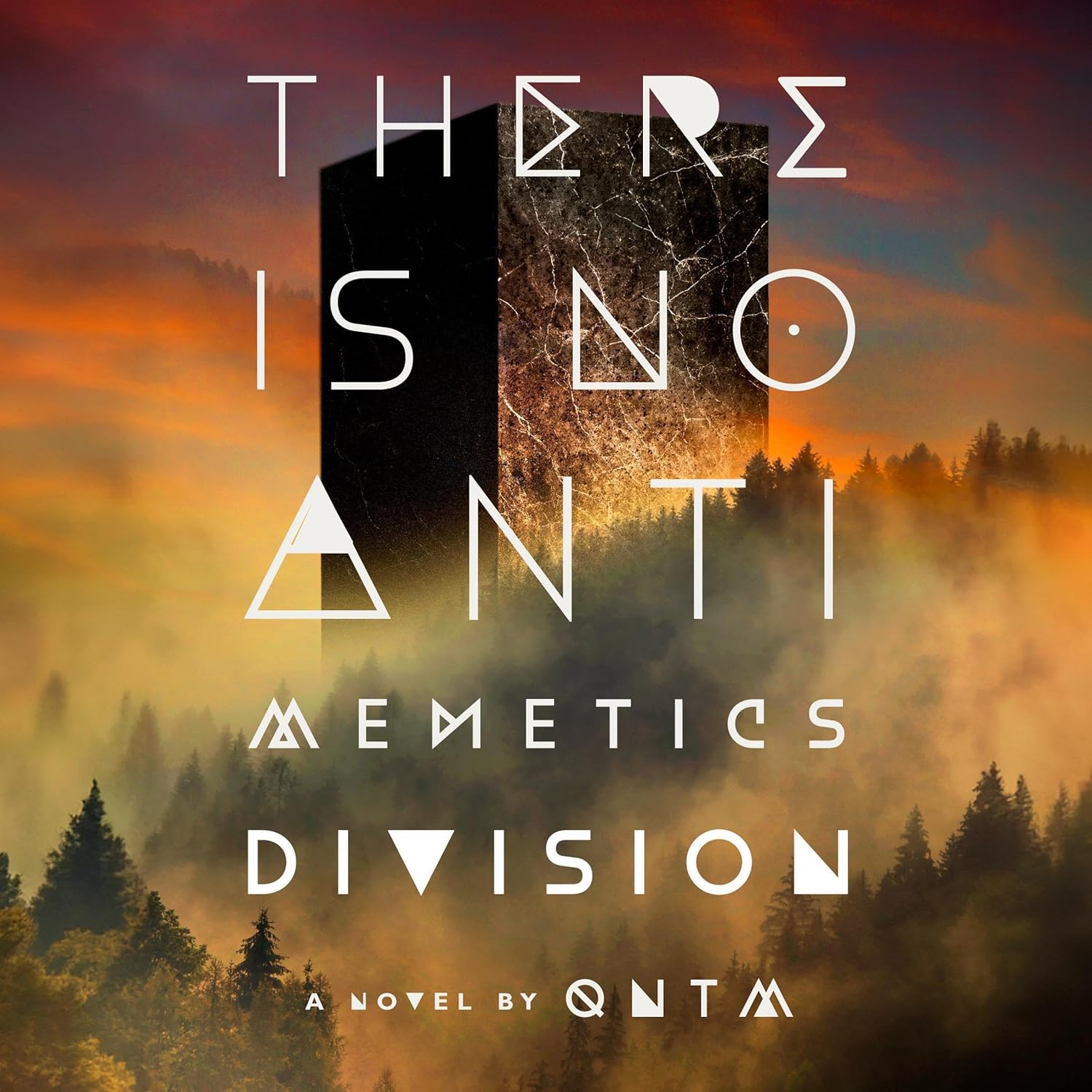
isbn-13: 9780593983751
Audible
AI Generated Content
Generated by gemini-3-pro-preview
Introduction
There Is No Antimemetics Division is a science fiction horror novel by qntm (Sam Hughes). While originally published as a series of stories on the SCP Foundation Wiki, the 2025 Random House edition (ISBN 9780593983751) presents the narrative as a standalone novel, refining the terminology while maintaining the core story [1][5]. The novel is set within a secretive organization dedicated to securing and containing paranormal anomalies that threaten reality. The focus of the story is the titular Antimemetics Division, a department responsible for containing “antimemes”—ideas, entities, or objects with self-censoring properties. These anomalies naturally erase themselves from human memory, meaning that once an observer looks away, they immediately forget what they saw [2]. As a result, the Division faces a unique existential horror: they are an organization that no one, not even the rest of their own agency, remembers exists, often fighting wars that are forgotten the moment they are won.
Overview of the story
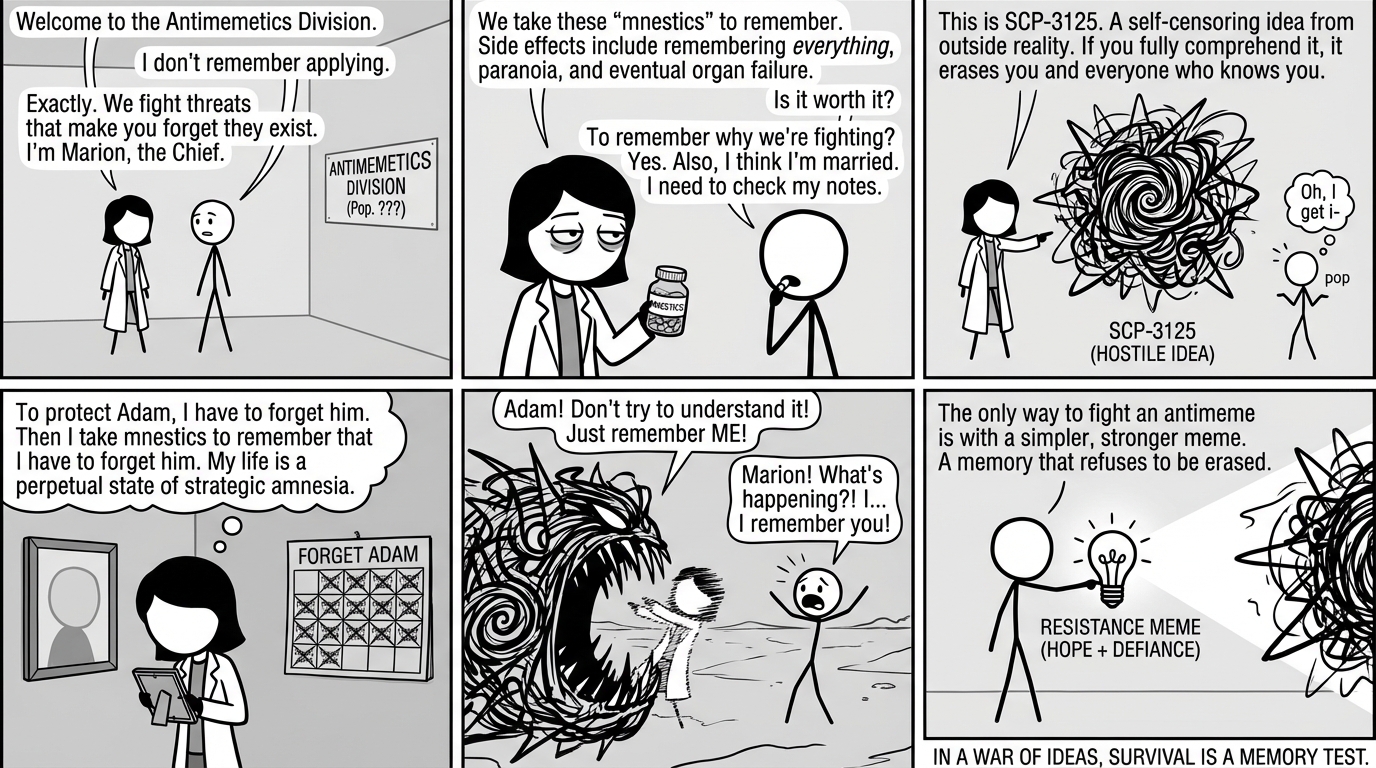
The narrative follows a non-linear structure that escalates from procedural investigation to apocalyptic survival. It begins with Marie Quinn, the Chief of the Antimemetics Division, who is constantly battling the side effects of “mnestics”—memory-enhancing drugs required to perceive the threats she hunts. She identifies a looming, catastrophic threat: an aggressive, sentient antimemetic complex known as SCP-3125 (or “The Adversary” in some editions). This entity is not a physical monster but a hostile idea system from outside standard reality that invades the human “noosphere” (the realm of thought) [5]. It kills anyone who fully perceives it, erasing them and their associates from existence.
As the story progresses, Quinn realizes that the war against 3125 has been ongoing for years, but her team keeps losing and forgetting their defeats. The conflict reaches a breaking point when 3125 fully manifests, dismantling the Division and conquering human consciousness. The narrative perspective then shifts to Adam Quinn, Marie estranged husband. Previously hidden away and memory-wiped for his protection, Adam possesses a rare natural immunity to antimemetic effects. In a post-apocalyptic world where the enemy rules openly but invisibly, Adam must piece together his fragmented identity and finish the mission Marie started, transitioning the story from a secret agent thriller to a desperate survival saga [5].
Overview of the characters
Marie Quinn serves as the protagonist for the first half of the book. As the Chief of the Antimemetics Division, she is portrayed as the “Iron Lady”—hyper-competent, paranoid, and utterly dedicated to her duty. Her character defines the tragic nature of the Division: she sacrifices her health, sanity, and personal life to fight a war she knows she might not remember winning [2].
Adam Quinn emerges as the protagonist in the second half. Unlike Marie, he starts with no knowledge of the anomalous world. His journey is one of discovery and endurance. His natural resistance to antimemes makes him the only person capable of seeing the world as it truly is without being destroyed by it, positioning him as the “action survivor” who must carry the torch when the experts have fallen [5].
SCP-3125 acts as the primary antagonist. It is a “five-dimensional” meme complex that functions as a cosmic predator of information. It thrives on secrecy and destroys any mind that becomes aware of it. It manifests through human avatars and cults, representing an ultimate, unknowable existential threat [5].
Simon Lee a researcher who keeps losing pieces of his own career to the very threats he studies.
Clay appears initially as an internal auditor sent to evaluate the Division but is revealed to be a “human-shaped antimeme,” a construct created by 3125 to infiltrate the organization, highlighting the paranoia-inducing nature of the enemy.
Overview of the themes
The novel explores complex themes of memory and identity, frequently posing the question of whether a person remains the same if their memories are erased or altered. Characters are forced to trust notes left by their past selves, highlighting the fragility of human consciousness [2].
Cosmic horror is central to the narrative, but it is distinct from traditional physical monsters. The threat is conceptual; the horror stems from the inability to know one is at war. This ties into the theme of bureaucracy and isolation. The Antimemetics Division is isolated not by physical barriers but by the cognitive inability of others to perceive them. This creates a profound sense of nihilism and duty, as the characters die to save a world that is incapable of acknowledging their sacrifice [5].
Finally, the story contrasts existential nihilism with human connection. While 3125 represents a void of meaning—a hateful, consuming nothingness—the narrative suggests that the bond between Marion and Adam is the only force resilient enough to challenge it.
Sources
- [1] eBay Listing & Random House: Confirmed 2025 Hardcover Edition details and ISBN
- [2] Reddit (r/SCPDeclassified): “There Is No Antimemetics Division [Part 1] - We Need To Talk About Fifty-Five”: https://www.reddit.com/r/SCPDeclassified/comments/7296q3/there_is_no_antimemetics_division_part_1_we_need/
- [3] qntm.org: Author’s official site and landing page for the book
- [4] SCP Wiki: “Antimemetics Division Hub”: https://scp-wiki.wikidot.com/antimemetics-division-hub
- [5] TV Tropes: “Literature / There Is No Antimemetics Division”: https://tvtropes.org/pmwiki/pmwiki.php/Literature/ThereIsNoAntimemeticsDivision